
EcoDuct Market Update 08 August 2026
EcoDuct alignment to UK’s Future Homes Standard (FHS)
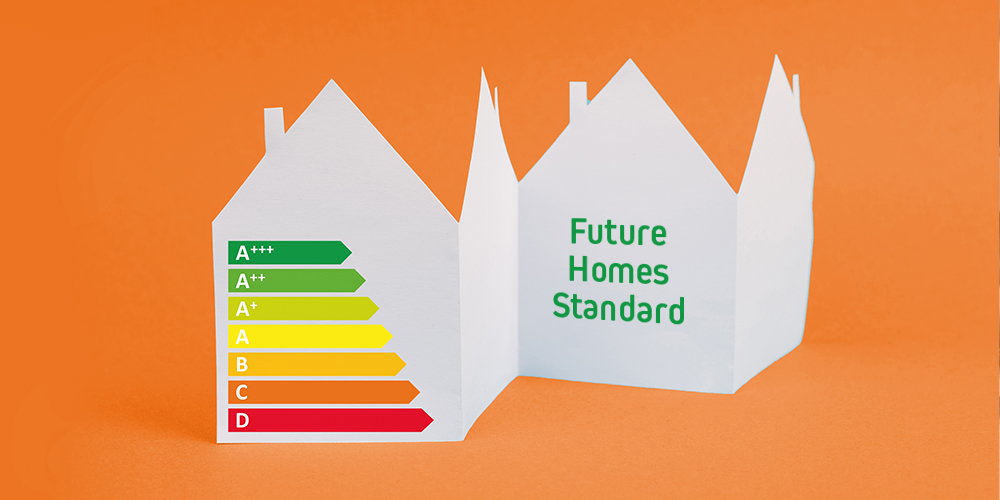
The UK's Future Homes Standard (FHS) updates Part L of the Building Regulations for England. Officially published in March 2026, it requires all new-build homes starting construction after the transitional period to produce 75% fewer carbon emissions than older 2013 baselines.
EcoDuct Transformative Ductwork Technology aligns directly with the updated FHS by enabling the mandatory shift toward airtight, high performance, low-carbon residential builds the regulations now demand. As the FHS phases out fossil-fuel heating and mandates advanced building fabric efficiency, homes require highly efficient mechanical ventilation. EcoDuct delivers exactly that.
EcoDuct meets these strict criteria through the following key alignments:
🏢 1. Integration with Low-Carbon Heating and MVHR Systems
System Synergy: The FHS drives the universal adoption of electric heat pumps and Mechanical Ventilation with Heat Recovery (MVHR) units to maintain indoor air quality in airtight homes.
Thermal Performance: Both heat pumps and MVHR systems dictate the use of high-quality insulated ductwork. EcoDuct’s pre-insulated, non-metallic design minimizes thermal bridging and eliminates the energy losses common in poorly lagging traditional metal ducts.
📉 2. Drastic Reductions in Carbon Footprint
Embodied Carbon:The FHS prioritizes whole-life carbon assessments. EcoDuct features up to a 75% reduction in embodied carbon compared to standard galvanized steel ductwork.
Operational Carbon: Its geometric flat-oval and circular designs reduce HVAC airflow resistance, dropping system energy consumption and operational carbon by up to 45%.
🛑 3. Enhanced Fire, Smoke, and Material Safety Compliance
Stricter Insulation Rules: Modernized safety standards moving alongside the FHS call for stricter insulation materials. While typical residential duct insulation relies on subpar Class E materials, EcoDuct provides Class B fire and smoke performance.
Indoor Air Quality: Constructed from phenolic insulation panels, the system is fully non-toxic, inert, and free from volatile organic compounds (VOCs), matching the FHS mandate for healthier indoor environments.
🗜️ 4. Advanced Airtightness & Compliance Testing
Zero-Carbon Ready: Under the FHS, homes are evaluated heavily on air permeability. EcoDuct uniquely achieves a Class D air leakagerating at 2,500 Pa, safeguarding building airtightness goals.
Assessment Accuracy: The high-performance metrics of EcoDuct make it easier for developers to hit their targets within the FHS’s required Home Energy Model (HEM) compliance software.
Additional advantages that set EcoDuct apart:
1. Passivhaus compliant – inert materials, no VOC’s, airtight, no thermal bridging
2. Optimal IAQ - no fibres or other hostile substances released into the airstream
3. Space saving - thinnest possible phenolic insulation due to ultra-low K-values (for optimal thermal performance) saves critical space in narrow ceiling voids
EcoDuct is not just compliant with the Future Homes Standard — it is engineered to make high-performance, low-carbon homes easier and more reliable to deliver.
NB: please refer to other recent EcoDuct Market Updates on:
UK Property Estates and Reducing Scope 1-3 Emissions